Votre rendez-vous avec les mots caméléons du francais
Je dis – jeudi, votre second rendez‑vous avec les mots caméléons et leurs sons jumeaux. Une nouvelle occasion d’exercer vos talents d’orateur
I say – Thursday, your second encounter with the chameleon words and their twin sounds. Another opportunity to sharpen your speaking skills.
Caméléon n°1 - Je dis et jeudi (I say and Wednesday)
The image below shows two almost identical T‑shirts worn by two different people.
Two words with twin sounds… but completely different meanings depending on the context or situation.
Welcome to the little game of homophones.
Écoutez la différence
(Listen to the difference)
In this activity, you explored two words that sound alike but have completely different meanings: je dis and jeudi. By listening to the sentences, your ear learned to notice their pronunciation, their rhythm, and how they are used in real situations. You also saw that homophones can be a subtle mix of vocabulary, verb forms, and even liaisons. With practice, these differences become more instinctive, more familiar, almost natural when speaking. Keep practicing out loud . The more you play with these sounds, the more effortlessly they settle in.
And since no one is king in their own land, each audio is available in three different speeds. As native speakers, we don’t all speak at the same pace: some speak calmly, others very fast, and some even have small pronunciation quirks. TFL kept this detail in mind, tiny in appearance but essential, because these variations can easily confuse a learner’s ear and slow down oral progress. So open your ears wide, let them get used to the French flow, and catch the syllables, the sounds, the tiny details; they’re what make all the difference when speaking.
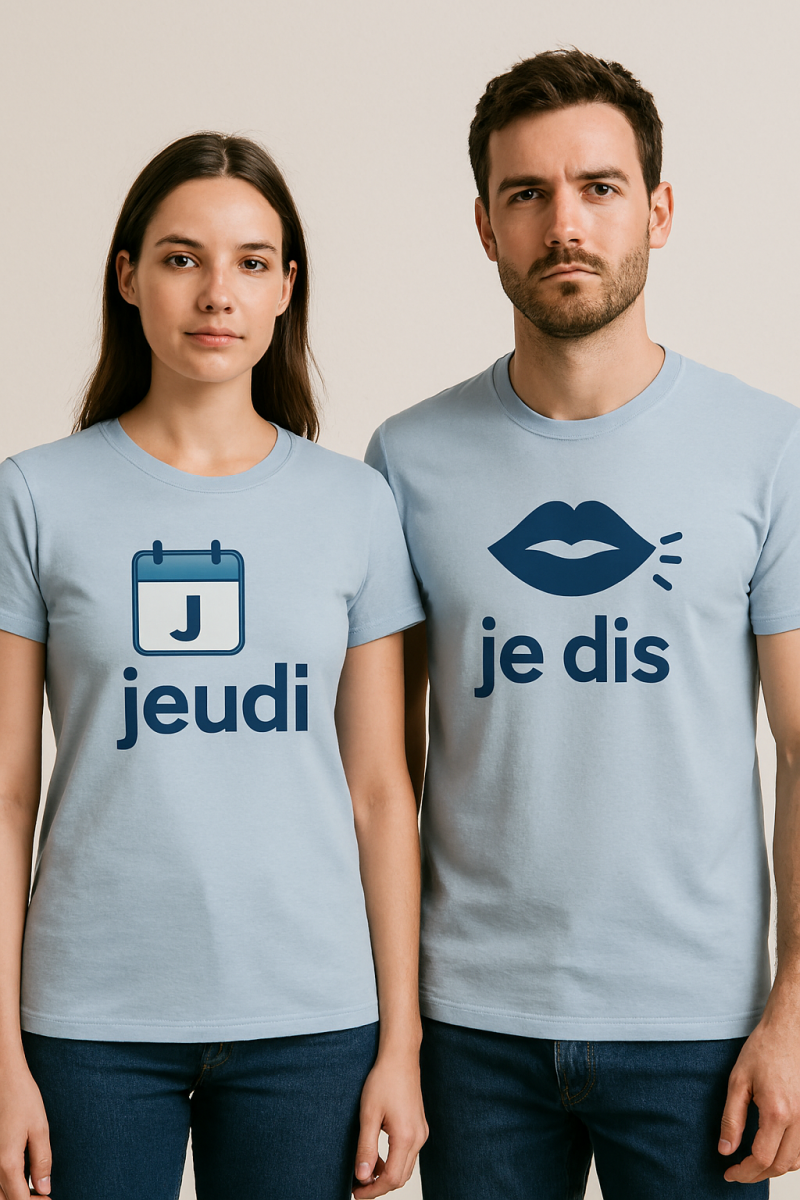
Jeudi… Je dis… même musique, autre sens.
Thursday… I say… same music, different meaning.
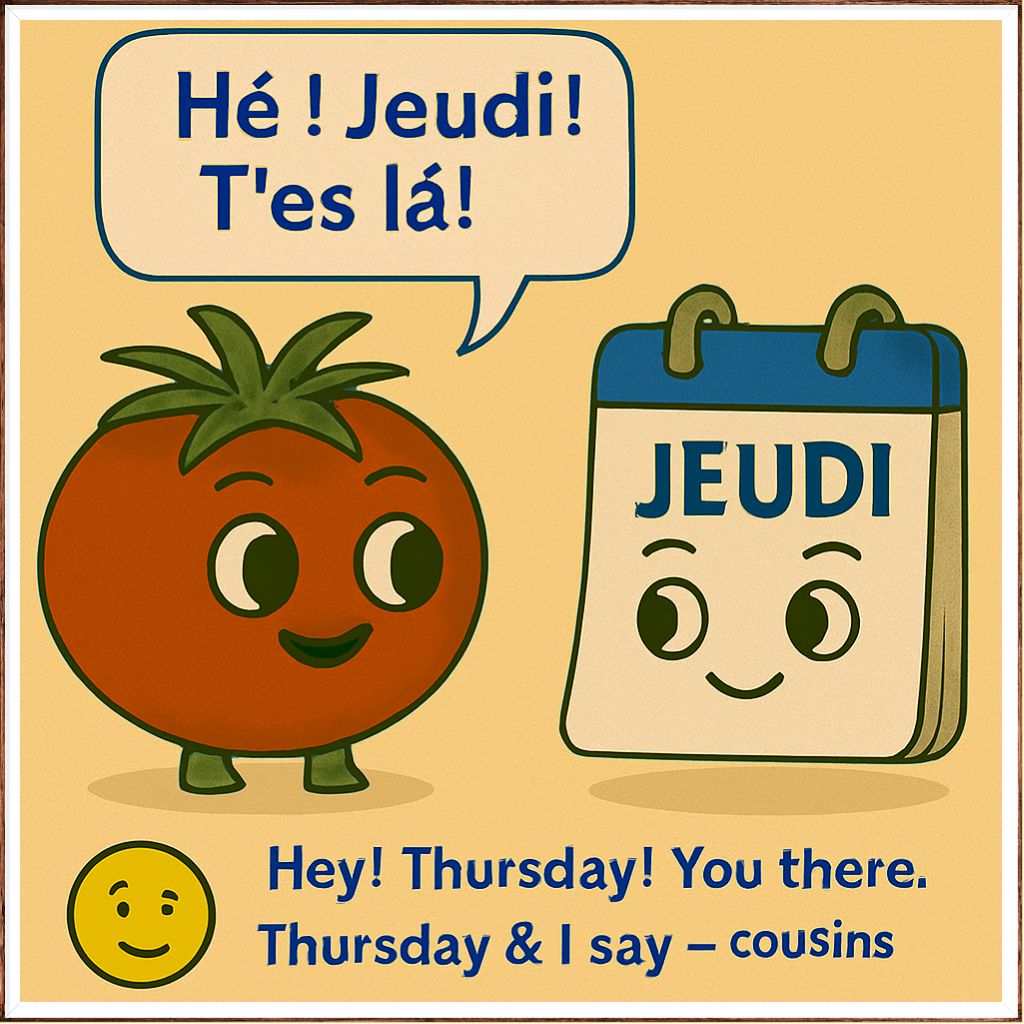
J’aime bien le jeudi. C’est mon jour de repos. Chaque semaine, je l’attends avec impatience, et tous les jeudis, je fais des activités différentes. Le jeudi, c’est mon jour à moi !
Thursday & I say : They look alike, but we’re not related.
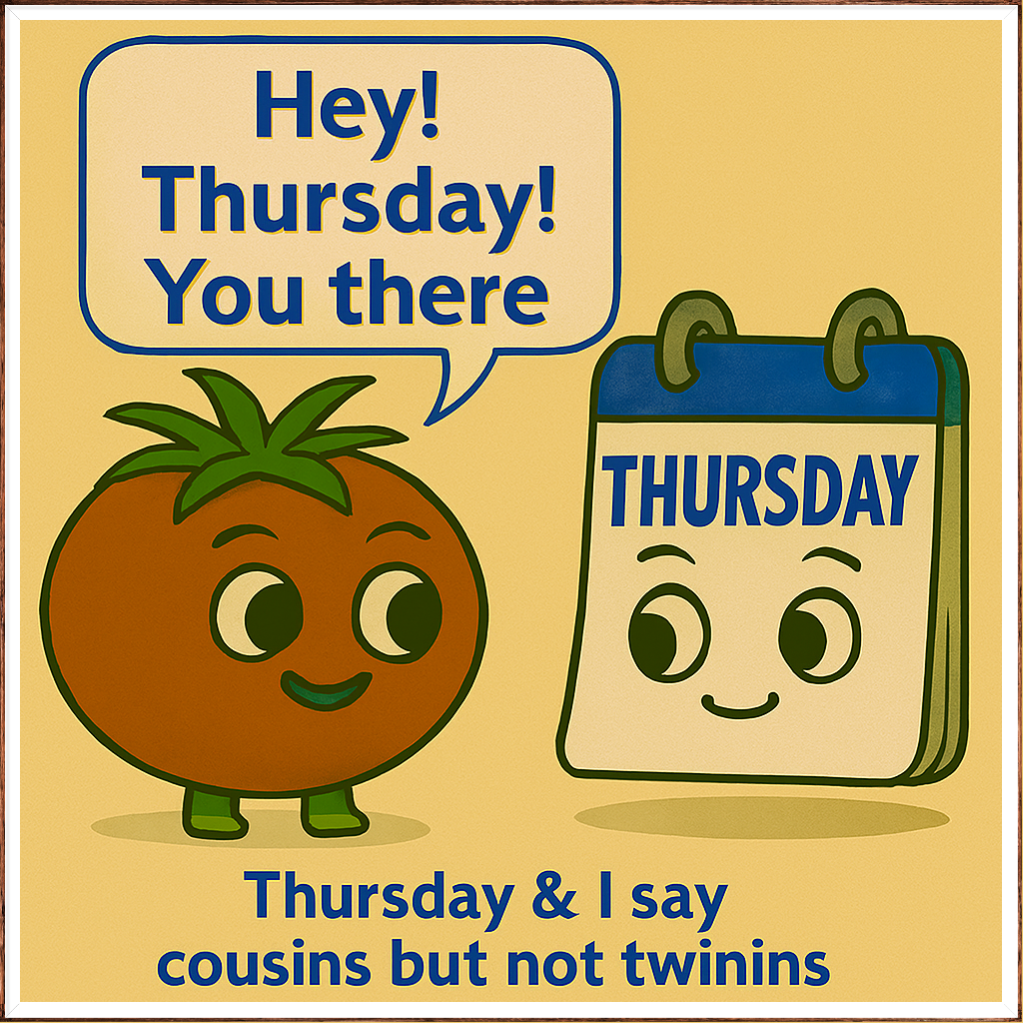
Jeudi et Je dis se répondent comme un écho. Deux sons proches, deux sens différents.
Écoutons‑ les ensemble.
Exemple 1
A : Je dis souvent aux enfants que leurs affaires pour l’école doivent être prêtes avant jeudi matin.
B : Oui, mais le jeudi matin, ils sont toujours en retard.
A : Je me demande pourquoi je dis, redis et re‑redis toujours la même chose…
B : Peut‑être parce qu’ ils entendent juste “jeudi”, pas “je dis”.
A : Ah ben voilà. Tout s’explique. N'est-ce pas ?
A: I keep telling the kids their school stuff has to be ready before Thursday morning.
B: And yet every Thursday morning, they’re still running late.
A: I honestly don’t know why I keep saying it, repeating it, and re‑repeating it…
B: Maybe because all they hear is “Thursday,” not “I say.”
A: Well… there you go. That explains everything. You know?
Exemple 2
A : Tu viens avec nous jeudi ? On va se faire une virée entre potes.
B : Jeudi… ah, je ne sais pas si je serai libre.
A : Et si je dis jeudi dans huit jours ?
B : Ah, le jeudi 15 ?
A : Oui, ce jeudil à. Tu serais dispo ?
B : Oui, mais, Je ne sais pas si tout le monde sera libre.
A : Bon, de toute façon, je te le dis tout de suite : ce jeudi, je ne pourrai pas.
A: You coming with us on Thursday? We’re planning a little hangout with the crew.
B: Thursday… hmm, not sure I’ll be free.
A: And what if I say Thursday in eight days?
B: Oh, Thursday the 15th?
A: Yeah, that one. You think you’re free?
B: Yeah, maybe… but I’m not sure everyone else will be.
A: Anyway, just so you know: this Thursday, I can’t make it.
Exemple 3
A: Can we meet on Thursday?
B: What? Can you say that again?
A: I’m saying: can we meet on Thursday?
B: Oh, sorry… Thursday. Got it. And if I say Thursday at 10, does that work?
A: Yeah, Thursday at 10 works. See you then.
A: Can we meet on Thursday?
B: What? Can you say that again?
A: I’m saying: can we meet on Thursday?
B: Oh, sorry… Thursday. Got it. And if I say Thursday at 10, does that work?
A: Yeah, Thursday at 10 works. See you then.

La langue française bouge, glisse, se transforme. Entre “jeudi” et “je dis”, tout peut basculer en un son. Alors, gardez les oreilles ouvertes…
On attaque maintenant “dix vins” et “divins”.